



Mercury Dime Key Dates: Complete Rarity Guide With Values, Mintages, and Collecting Tips
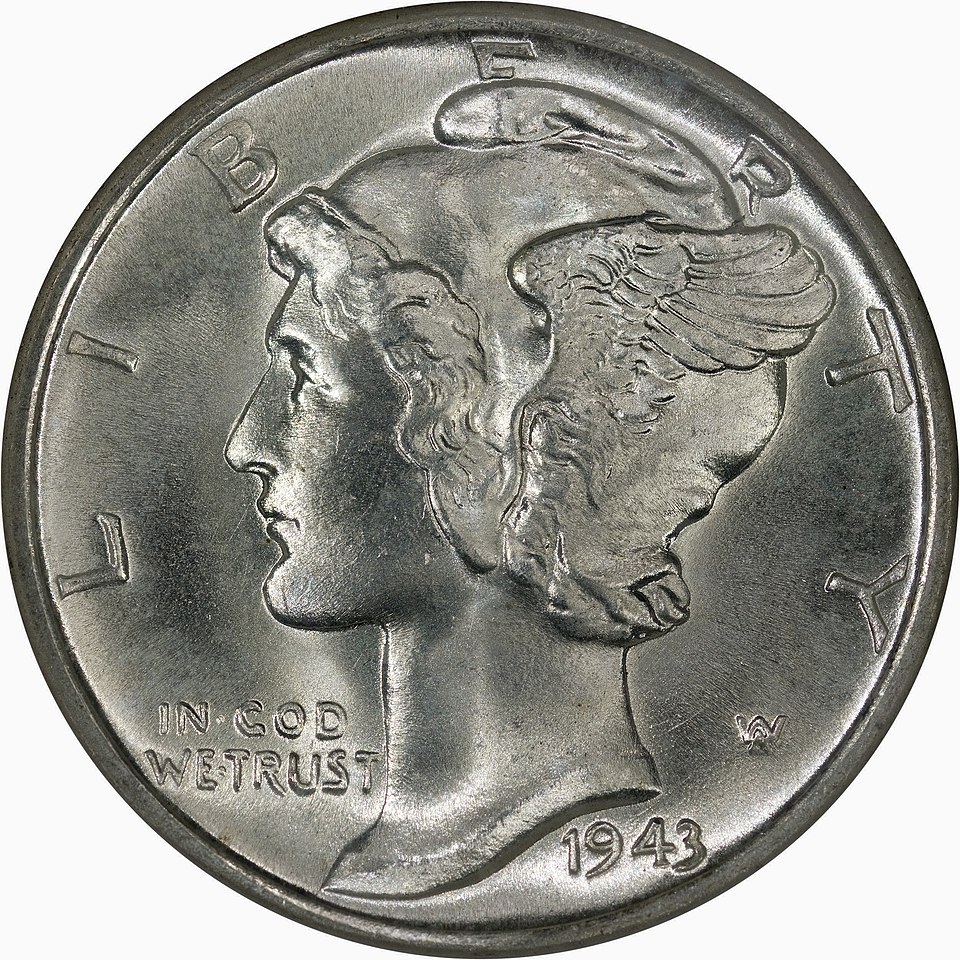
The Mercury Dime (officially the Winged Liberty Head Dime) is one of the most beautiful and widely collected coin series in American numismatics. Designed by Adolph A. Weinman and minted from 1916 to 1945, the series spans two world wars, the Roaring Twenties, the Great Depression, and the dawn of the atomic age. It also contains some of the most famous key dates and error varieties in all of U.S. coinage.
Knowing which dates are rare, which are conditionally scarce, and which error varieties exist is essential for any collector building a Mercury Dime set — or for anyone who encounters these coins in inherited collections, estate sales, or rolls of junk silver. This guide covers every key date, their mintages, approximate values by grade, and strategies for collecting intelligently.
Mercury Dimes are composed of 90% silver and 10% copper, with each coin containing 0.07234 troy ounces of pure silver. For the current melt value baseline, check the live silver spot price.
What Makes a Mercury Dime a "Key Date"?
In numismatics, a key date is a coin within a series that is significantly harder to find than other dates due to low mintage, low survival rate, or both. Key dates are the coins that set the difficulty — and cost — of completing a collection. Semi-key dates are moderately scarce, and common dates are readily available.
Mercury Dimes have a clearly defined set of key dates that every collector should memorize. Low mintage is the primary factor, but condition rarity also plays a role: some dates were produced in large quantities but are extremely rare in high grades because they circulated heavily during the Depression.
The Complete Key Date and Semi-Key Date List
| Date/Mint | Mintage | Rarity Level | G-4 Value | VF-20 Value | MS-65 FB Value |
|---|---|---|---|---|---|
| 1916-D | 264,000 | Key (the King) | $1,200+ | $3,500+ | $35,000+ |
| 1921 | 1,230,000 | Key | $70+ | $250+ | $8,000+ |
| 1921-D | 1,080,000 | Key | $80+ | $300+ | $12,000+ |
| 1926-S | 1,520,000 | Semi-Key | $15+ | $120+ | $15,000+ |
| 1919-D | 9,939,000 | Semi-Key | $5+ | $40+ | $5,000+ |
| 1919-S | 8,850,000 | Semi-Key | $5+ | $35+ | $5,500+ |
| 1916-S | 10,450,000 | Semi-Key | $6+ | $15+ | $2,000+ |
| 1927-D | 4,812,000 | Semi-Key | $5+ | $30+ | $6,000+ |
| 1928-D | 4,161,000 | Semi-Key | $5+ | $25+ | $4,500+ |
| 1931-D | 1,260,000 | Semi-Key | $15+ | $45+ | $2,500+ |
| 1931-S | 1,800,000 | Semi-Key | $8+ | $35+ | $3,000+ |
| 1942/1 | Error variety | Key (overdate) | $500+ | $1,200+ | $15,000+ |
| 1942/1-D | Error variety | Key (overdate) | $450+ | $1,100+ | $18,000+ |
FB = Full Bands (split bands on the fasces are fully separated — a key determinant of strike quality and premium). Values are approximate based on current market data.
The 1916-D Mercury Dime: King of the Series
The 1916-D Mercury Dime is the undisputed key date of the series and one of the most famous rarities in all of American numismatics. With a mintage of just 264,000 coins — produced during the first year of the series at the Denver Mint — the 1916-D is scarce in any grade and genuinely rare in Mint State.
Several factors make the 1916-D so valuable:
- First-year issue: 1916 was the inaugural year for the Mercury Dime, and many collectors were unaware of the new design, so few were saved.
- Low mintage: Only 264,000 were struck, compared to 22.1 million at Philadelphia and 10.4 million at San Francisco.
- High demand: Every Mercury Dime collector needs one, and there are far more collectors than available coins.
- Counterfeiting risk: The 1916-D is one of the most commonly counterfeited U.S. coins. Many fakes are altered 1916 Philadelphia coins with an added "D" mint mark. Always buy from reputable dealers or in PCGS/NGC holders.
How to authenticate: On a genuine 1916-D, the mint mark is positioned between the rim and the bottom of the olive branch on the reverse. The "D" should be small, cleanly struck, and properly aligned. Magnification is essential for detecting added or tooled mint marks. For comprehensive buying safety, read our scam prevention guide.
The 1921 and 1921-D: Depression-Era Rarities
After a four-year production hiatus (1917–1920 saw normal mintages, but 1921 returned with very low numbers), the 1921 and 1921-D Mercury Dimes are the second and third most valuable regular-issue dates in the series. The Philadelphia Mint struck just 1,230,000 and Denver produced only 1,080,000 — both among the lowest mintages in the series.
Unlike the 1916-D, which was a first-year novelty, the 1921 issues were produced during an economic downturn when few people had disposable income for coin collecting. Survival rates are correspondingly low, making Mint State examples exceptionally rare for both dates.
The 1942/1 Overdate Errors
The 1942/1 overdate errors are among the most dramatic and valuable die errors in U.S. coinage. These coins were created when 1942-dated dies were punched over existing 1941-dated dies, leaving visible traces of the underlying "1" beneath the "2" in the date.
Both Philadelphia (1942/1) and Denver (1942/1-D) versions exist. The overdate is clearly visible under moderate magnification and can often be detected with the naked eye by experienced collectors. These errors carry substantial premiums in all grades and are highly sought after by both Mercury Dime specialists and error coin collectors.
Full Bands: The Strike Quality Premium
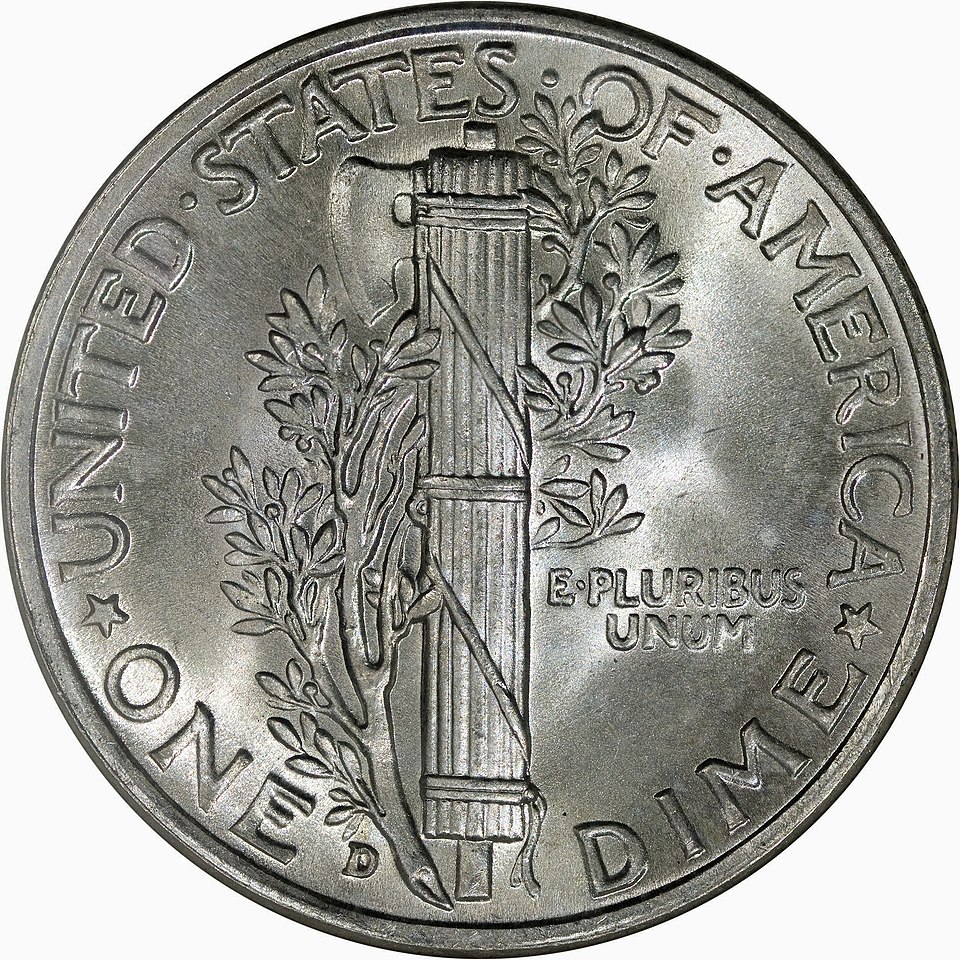
Mercury Dime values in Mint State are heavily influenced by the Full Bands (FB) designation. The reverse of the Mercury Dime features a fasces (a bundle of rods bound with an axe), and the horizontal bands wrapping the rods should show clear, complete separation between the center pair of bands. On many coins, these bands are mushy or merged due to die wear, weak strikes, or improper die spacing.
Coins that receive the FB designation from PCGS or NGC command premiums of 50% to 500% or more over non-FB examples of the same date and grade. For key dates, the FB premium can add thousands of dollars to the value.
How to Start Collecting Mercury Dimes
- Start with a Whitman or Dansco album. A coin folder with labeled slots for every date and mint mark gives you a visual roadmap and a satisfying way to track progress.
- Fill common dates first. Dates from 1934–1945 are widely available in VF and EF condition for $3–$10 each. Building momentum with affordable coins keeps you motivated.
- Set a target grade. VF-20 to EF-40 is the sweet spot for most collectors — nice detail, attractive eye appeal, and affordable premiums even for semi-key dates.
- Save key dates for last. The 1916-D, 1921, and 1921-D are the most expensive coins in the set. Buy them only after you have filled 80%+ of the album so you know you are committed to the series.
- Buy certified for expensive coins. Any Mercury Dime worth more than $100 should be in a PCGS or NGC holder to guarantee authenticity and grade. This is especially critical for the 1916-D and overdate varieties.
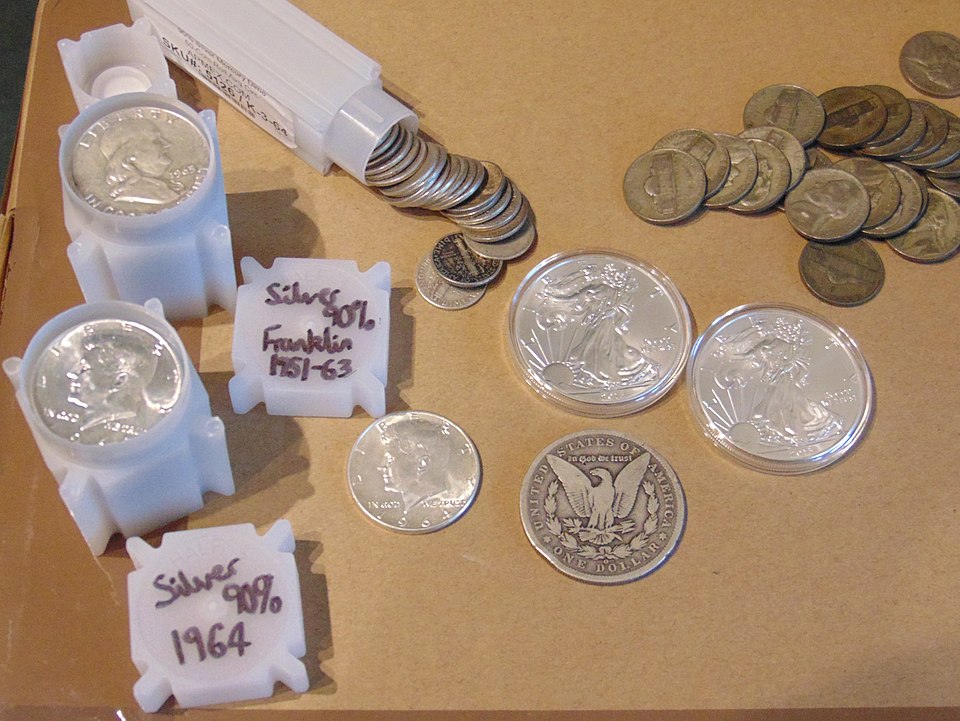
- Check junk silver lots. Rolls and bags of 90% junk silver dimes occasionally contain Mercury Dimes, including scarcer dates. It is an affordable way to hunt for additions to your collection while stacking silver at the same time.
Mercury Dimes as Silver Bullion
Beyond their numismatic value, Mercury Dimes are a practical form of fractional silver. Each coin contains 0.07234 troy ounces of silver, making a roll of 50 dimes equal to approximately 3.6 troy ounces of silver. They are popular among silver stackers for several reasons:
- Small, divisible units: Ideal for barter scenarios where a full troy ounce would be impractical.
- Instantly recognizable: U.S. 90% silver coins are widely recognized and accepted.
- Low premiums in bulk: Common-date Mercury Dimes in circulated condition trade near or at the same premium as constitutional silver (Roosevelt Dimes, Washington Quarters), but with more collector appeal.
For current pricing on 90% silver coins, check our silver collection and compare options in our silver coins vs bars guide.
Frequently Asked Questions
What is the most valuable Mercury Dime?
The 1916-D Mercury Dime is the most valuable regular-issue date, worth $1,200+ even in heavily worn condition and $35,000+ in gem Mint State with Full Bands. The 1942/1 and 1942/1-D overdate errors are also among the most valuable.
How can I tell if my 1916-D Mercury Dime is real?
Look for a small, cleanly struck "D" mint mark on the reverse between the rim and olive branch. Compare the font, size, and placement against known genuine examples. Many fakes are 1916 Philadelphia coins with a hand-tooled "D" added. When in doubt, submit the coin to PCGS or NGC for professional authentication.
Are Mercury Dimes a good investment?
Key dates have appreciated steadily over the past 50 years and are considered a solid numismatic investment. Common dates trade near silver melt value and are an affordable way to accumulate fractional silver. As with all collectibles, buy coins you enjoy — financial returns are a bonus, not a guarantee.
What does "Full Bands" mean on a Mercury Dime?
Full Bands (FB) indicates that the horizontal bands on the center of the fasces (reverse design) show complete, uninterrupted separation. This is a strike quality indicator that dramatically increases the value of Mint State Mercury Dimes.
Where can I buy Mercury Dimes?
MintBuilder offers individual key dates and bulk lots of common-date Mercury Dimes for silver stackers. Browse our silver collection, check the live silver price, and join VIP for member-exclusive pricing.