



$2.50 Gold Indian Head – 1908 – 1929: Complete Collector's Guide, Values, and History
The $2.50 Gold Indian Head – 1908 – 1929 is a cornerstone of American coinage history. The plan had been to duplicate the $20 gold piece in two smaller sizes but that proved impossible as the mottoes and legends were too small to read. Struck from 1908–1929 during the Progressive Era to Great Depression period, this series offers collectors a tangible connection to America's past along with enduring gold value.
Whether you are building a type set, completing a date run, or looking for gold coins with strong numismatic upside, this comprehensive guide covers everything you need to know about the Gold Indian Head series. Check the live gold spot price before you start shopping, then explore our how to avoid precious metals scams for competitive pricing.
Historical Background: The Progressive Era to Great Depression Era
President Theodore Roosevelt championed a renaissance in American coin design, commissioning sculptor Augustus Saint-Gaudens to redesign the gold coinage. This era produced some of the most beautiful coins ever struck, including the Saint-Gaudens Double Eagle. The Great Depression and Executive Order 6102 in 1933 effectively ended circulating gold coinage in America.
World War I, the Roaring Twenties, and the 1929 stock market crash defined this turbulent period. Roosevelt's gold recall in 1933 makes surviving gold coins from this era particularly significant to collectors.
Philadelphia, Denver, and San Francisco were the primary operating mints. The Denver Mint (D) had opened in 1906. Understanding the historical context of the Gold Indian Head helps collectors appreciate why certain dates and mint marks command significant premiums in todays market. For more on how mint location affects value, see our mint marks guide.
Design Details of the Gold Indian Head
The plan had been to duplicate the $20 gold piece in two smaller sizes but that proved impossible as the mottoes and legends were too small to read.
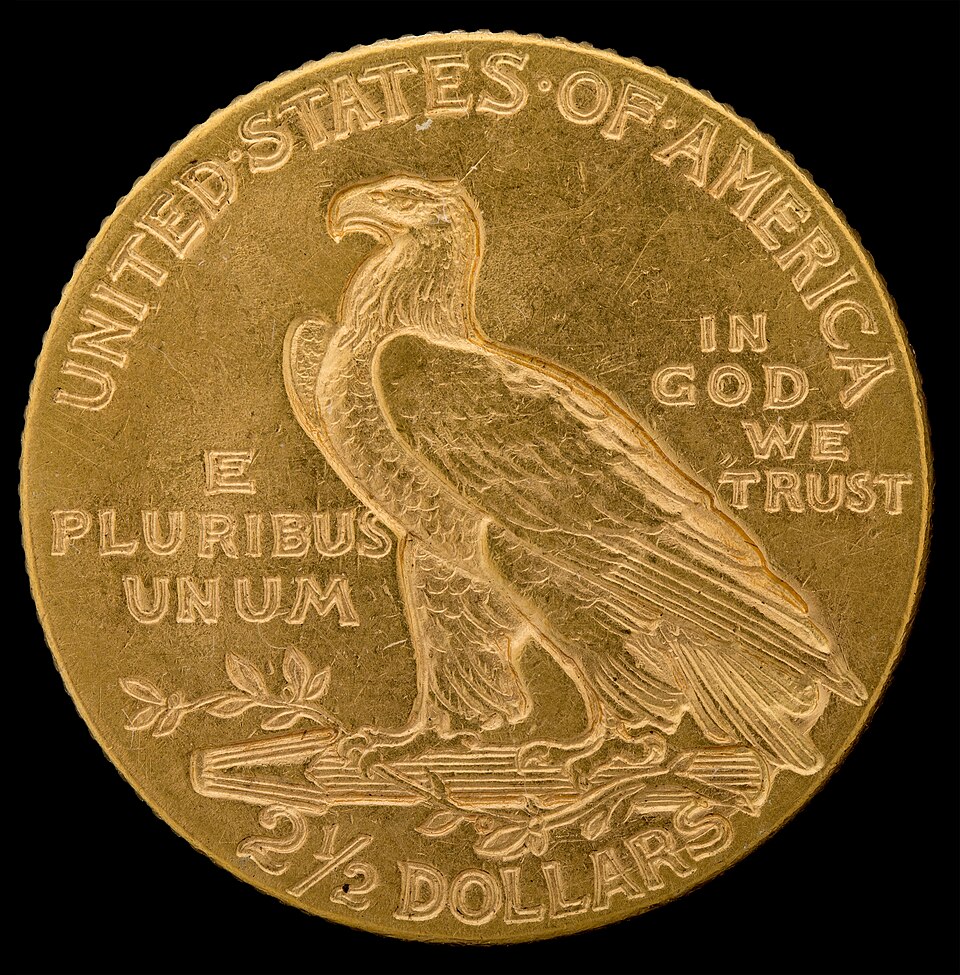
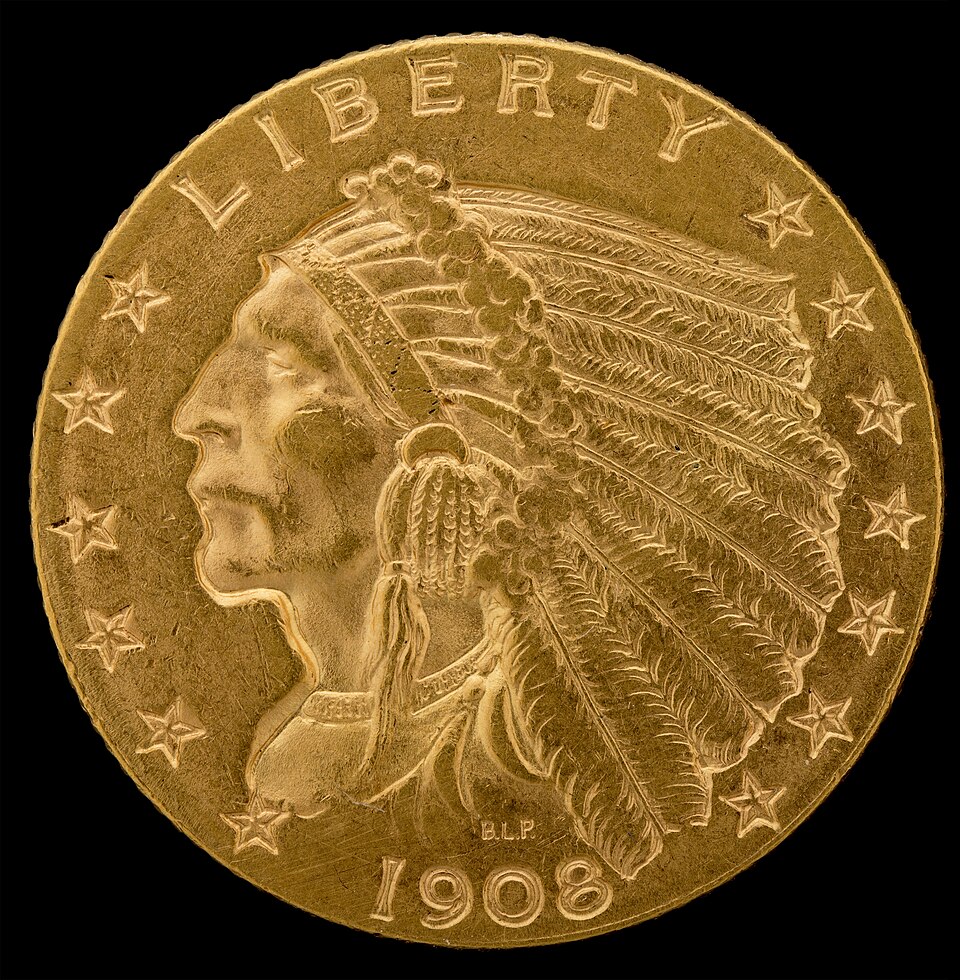
The obverse (front) of the Gold Indian Head features a carefully engraved design that captured the artistic sensibilities of the Progressive Era to Great Depression period. U.S. Mint engravers invested considerable skill in every die, and subtle variations between production years give collectors fascinating details to study. The reverse (back) carries a complementary design that reflects the national symbols and values of the era.
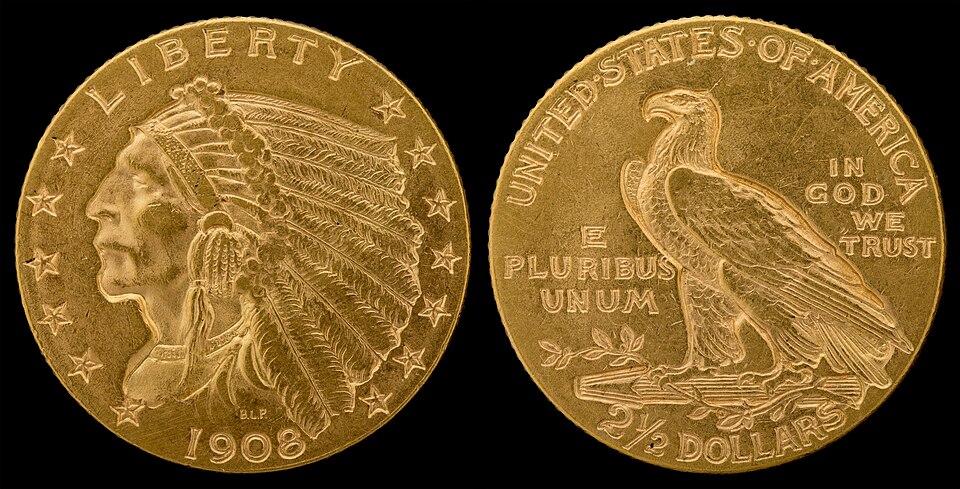
When evaluating design quality on a Gold Indian Head, collectors look for sharpness of the central device, completeness of stars and lettering, and the depth of relief. Early die states typically show the crispest detail, while later die states may exhibit slight softness. These nuances affect both the grade and desirability of individual specimens. See our buying your first ounce for detailed evaluation techniques.
Technical Specifications
Every Gold Indian Head was struck to precise specifications mandated by Congress. Understanding these specifications helps collectors authenticate coins and identify counterfeits. Here are the key technical details:
| Specification | Detail |
|---|---|
| Denomination | $2.50 |
| Composition | 90% Gold, 10% Copper |
| Weight | 4.18 g |
| Diameter | 18.0 mm |
| Edge | Reeded |
| Years Minted | 1908–1929 |
| Minting Facility | Philadelphia, Denver, and San Francisco were the primary operating mints |
The gold content of these coins gives them intrinsic precious metal value in addition to their numismatic premium. At current gold prices, the melt value alone provides a solid price floor. Use our live gold spot price to calculate current melt values instantly.
Key Dates, Mint Marks, and Varieties
Not all Gold Indian Head coins are created equal. Certain dates, mint marks, and die varieties are significantly rarer than others and command premium prices from collectors. Here are the factors that affect rarity and value in this series:
| Factor | Impact on Value | What to Look For |
|---|---|---|
| Low-mintage dates | High – often 5x to 50x common dates | First and last years of production, branch mint issues |
| Mint marks | Moderate to High | CC (Carson City), S (San Francisco), O (New Orleans) |
| Die varieties | Moderate | Doubled dies, repunched dates, overdate errors |
| Proof issues | Very High | Mirror fields, frosted devices, low mintages |
| Condition rarity | Extreme in MS-65+ | Coins that survived without circulation wear |
Collectors should focus on the first year of issue (1908), the last year (1929), and any year where mintage dropped below the series average. Branch mint issues — especially from smaller facilities — tend to have lower survivorship and higher premiums today. Die varieties add another layer of collecting interest and can significantly increase a coins value when properly attributed. See our rare coins investing guide for advanced strategies on identifying undervalued dates.
Value Guide: What Is a Gold Indian Head Worth?
The value of a Gold Indian Head depends primarily on its condition (grade), date, mint mark, and the overall state of the numismatic market. Below are approximate retail value ranges for common dates in various grades. Key dates and rare varieties can be worth significantly more.
| Grade | Approximate Value (Common Dates) | Description |
|---|---|---|
| G-4 (Good) | $350–$600 | Heavy wear, outline visible |
| VG-8 (Very Good) | $500–$900 | Design clear, some detail |
| F-12 (Fine) | $700–$1,500 | Moderate wear, major features sharp |
| VF-20 (Very Fine) | $1,000–$2,500 | Light wear on high points |
| XF-40 (Extremely Fine) | $1,500–$4,000 | Slight wear, sharp detail |
| AU-50 (About Unc.) | $2,500–$7,000 | Trace wear only |
| MS-60 (Unc.) | $4,000–$12,000 | No wear, may have contact marks |
| MS-65 (Gem Unc.) | $10,000–$50,000+ | Sharp strike, full luster |
Values above are estimates for common dates and may fluctuate with market conditions. Key dates, rare mint marks, and coins with exceptional eye appeal or provenance can sell for multiples of these figures. Always obtain coins graded by gold coins buying guide for major purchases. Professional grading protects your investment and simplifies future resale.
Collecting Strategies for the Gold Indian Head Series
There are several rewarding approaches to collecting the Gold Indian Head series, each suited to different budgets and goals:
- Type collecting: Acquire one well-struck example to represent the entire series in a type set. This is the most budget-friendly approach and a great starting point for new collectors. Our U.S. Mint history covers type set building in detail.
- Date set: Collect one example from each year of production (1908–1929). This provides a satisfying progression and reveals the subtle changes that occurred across the production run.
- Date and mint mark set: The ultimate challenge — collect every date and mint mark combination. This requires patience, deep knowledge, and a larger budget, especially for scarce branch mint issues.
- Grade-specific collecting: Focus on a single target grade (e.g., VF-20 or MS-63) across all dates. This creates a visually uniform collection and helps control costs. See our PCGS vs NGC grading for help choosing a target grade.
- Precious metals investment: Focus on common-date examples in lower grades to accumulate gold content at the lowest premium. These coins carry both melt value and numismatic upside. Compare current premiums on our how to avoid precious metals scams page.
Authentication and Avoiding Counterfeits
Counterfeit Gold Indian Head coins exist in the marketplace, ranging from crude cast copies to sophisticated die-struck fakes. Gold coins are particularly targeted by counterfeiters due to their high intrinsic value. Here are the essential authentication steps:
- Weight verification: A genuine Gold Indian Head should weigh exactly 4.18 g. Use a precision scale accurate to 0.01 grams.
- Diameter check: The correct diameter is 18.0 mm. Digital calipers can quickly identify coins that are too large or too small.
- Specific gravity test: Gold has a distinctive specific gravity that counterfeit alloys cannot easily match.
- Visual inspection: Examine the coin under magnification for die characteristics, surface texture, and edge details that differ from genuine examples.
- Third-party grading: For valuable specimens, submit to PCGS or NGC for professional authentication and grading. Learn more in our IRA-eligible coins list.
- Buy from reputable dealers: The simplest protection against counterfeits is purchasing from trusted sources like MintBuilder. We verify every coins authenticity before listing. See our guide to choosing a coin dealer.
Investment Considerations
The Gold Indian Head offers a compelling combination of numismatic interest and gold bullion value. Even common dates in circulated grades trade well above melt value, providing a "numismatic premium" that has historically grown over time. Gold coins from the Progressive Era to Great Depression era are finite in supply — no more will ever be produced — while demand from collectors, investors, and institutions continues to grow.
For investors focused primarily on gold exposure, common-date Gold Indian Head coins in VF to AU grades offer an attractive entry point. You get real gold weight plus historical significance at premiums that are often competitive with modern bullion products. For a comparison of numismatic versus bullion investing approaches, see our gold vs silver comparison.
Frequently Asked Questions
How much is a Gold Indian Head worth?
The value depends on the date, mint mark, and condition. Common dates in Fine condition typically sell for $700–$1,500, while mint-state examples can bring $4,000–$12,000 or more. Key dates command significant premiums above these ranges. Check the live gold spot price for current market conditions.
What makes certain Gold Indian Head dates more valuable?
Lower mintage numbers, fewer surviving specimens, and strong collector demand create value. First-year (1908) and last-year (1929) dates are often popular, along with branch mint issues that had smaller production runs. Die varieties and errors add another premium layer.
Should I buy raw or graded Gold Indian Head coins?
For coins valued under $100, raw (ungraded) coins from reputable dealers offer the best value. For coins worth $100 or more, third-party grading from PCGS or NGC provides authentication, accurate grading, and improved liquidity. Our gold purity guide explains the process in detail.
Where can I buy Gold Indian Head coins at competitive prices?
MintBuilder offers a curated selection of gold coins with transparent pricing and fully insured shipping. Browse our how to avoid precious metals scams for current inventory, or lowest premium gold coins for member-exclusive pricing.
Are Gold Indian Head coins IRA eligible?
Pre-1933 U.S. gold coins are generally not IRA-eligible because they are considered collectible rather than bullion. However, their investment merit stands on its own through direct ownership. For IRA-eligible gold options, see our spot price vs premium explained.
Ready to add the Gold Indian Head to your collection? Check the live gold spot price, compare options in our how to avoid precious metals scams, and lock in todays price. MintBuilder ships every order fully insured with discreet packaging to your door.