




Why Buy Physical Gold and Silver? 10 Reasons Investors Choose Real Metal Over Paper

In an era of digital assets, paper currencies backed by nothing but government promises, and stock markets that can lose 30% of their value in a single quarter, physical gold and silver offer something increasingly rare: tangible wealth that you own outright, that carries zero counterparty risk, and that has preserved purchasing power for over five thousand years. No password. No counterparty. No server downtime.
Whether you are an experienced investor diversifying a seven-figure portfolio or a first-time buyer looking to protect your savings from inflation, the case for owning physical precious metals in 2026 has never been stronger. This guide explains exactly why — backed by historical data, real-world examples, and practical strategies for getting started.
Ready to act? Check the live spot prices for gold, silver, platinum, and palladium, then browse our gold and silver collections.
1. Inflation Protection That Actually Works
Since 1971, when the United States abandoned the gold standard, the U.S. dollar has lost over 87% of its purchasing power. A dollar in 1971 buys roughly 13 cents worth of goods today. Gold, by contrast, has risen from $35 per ounce to over $5,000 — a return that has more than kept pace with cumulative inflation.
The relationship is not perfectly linear year to year, but across decades the pattern is unmistakable: when the purchasing power of fiat currency falls, gold and silver rise to compensate. For a deep analysis of the data, read our guide on gold and inflation.
| Decade | Avg. Annual CPI Inflation | Gold Price (Start) | Gold Price (End) | Gold Return |
|---|---|---|---|---|
| 1970s | 7.1% | $35 | $512 | +1,363% |
| 1980s | 5.6% | $512 | $401 | -22% |
| 1990s | 3.0% | $401 | $288 | -28% |
| 2000s | 2.6% | $288 | $1,096 | +280% |
| 2010s | 1.8% | $1,096 | $1,517 | +38% |
| 2020–2026 | 4.8% | $1,517 | $5,100+ | +236% |
Notice that gold's strongest decades align with the periods of highest inflation. The 1970s and the 2020s — both marked by surging consumer prices — produced the most dramatic gold gains. For the latest price data, visit our live gold price chart.
2. Zero Counterparty Risk
When you hold a gold coin or silver bar in your hand, its value does not depend on any bank remaining solvent, any company meeting earnings estimates, any government honoring its promises, or any technology platform staying online. Physical precious metals are one of the only financial assets with zero counterparty risk.
By contrast, every paper financial asset — stocks, bonds, ETFs, bank deposits, even cryptocurrency on an exchange — requires someone else to honor an obligation. When Lehman Brothers collapsed in 2008, when Silicon Valley Bank failed in 2023, and when FTX imploded and vaporized billions in customer funds, the people who held physical gold and silver were completely unaffected. Their wealth sat in a safe, unchanged.
3. Portfolio Diversification Backed by Data
Gold has a consistently low or negative correlation with the S&P 500 and U.S. Treasury bonds. This makes it one of the most effective portfolio diversifiers available. Studies from the World Gold Council, JPMorgan, and Ray Dalio's Bridgewater Associates have all demonstrated that a portfolio allocation of 5–15% in physical gold reduces overall volatility while maintaining or improving long-term returns.
Silver adds additional diversification because its price is driven partly by industrial demand (solar panels, electronics, medical devices) and partly by investment demand, creating a different return profile than gold alone. For a detailed comparison, see our gold vs silver guide.
4. True Ownership and Privacy
When you buy physical gold or silver, you own it completely. There is no custodian who can freeze your account, no terms of service that can be changed overnight, and no board of directors making decisions about your property. In many states, private sales of precious metals below certain thresholds have no mandatory reporting requirements, offering a level of financial privacy that is increasingly rare in the digital age.
Physical metals also cannot be hacked, remotely confiscated through a software update, or erased by a data breach. In an increasingly digital world, the analog nature of physical metal is a feature, not a limitation.
5. Protection During Financial Crises
Gold has consistently spiked in value during the worst financial crises of the modern era:
- 2008 Financial Crisis: The S&P 500 fell 57% from peak to trough. Gold rose 25% over the same period and hit new all-time highs by 2011.
- 2020 COVID Crash: Stocks fell 34% in March 2020. Gold surged to a then-record $2,067 per ounce by August 2020.
- 2022 Inflation Shock: As the Fed raised rates aggressively and bonds suffered their worst year in history, gold held firm above $1,800 while the 60/40 portfolio lost 17%.
- 2024–2025 Geopolitical Escalation: Rising tensions and continued central bank buying pushed gold past $3,000 and then $4,000 for the first time.
When panic sets in and paper assets plunge, gold and silver do the one thing every investor needs: hold their value or increase. For more historical data, read how gold performs during recessions.
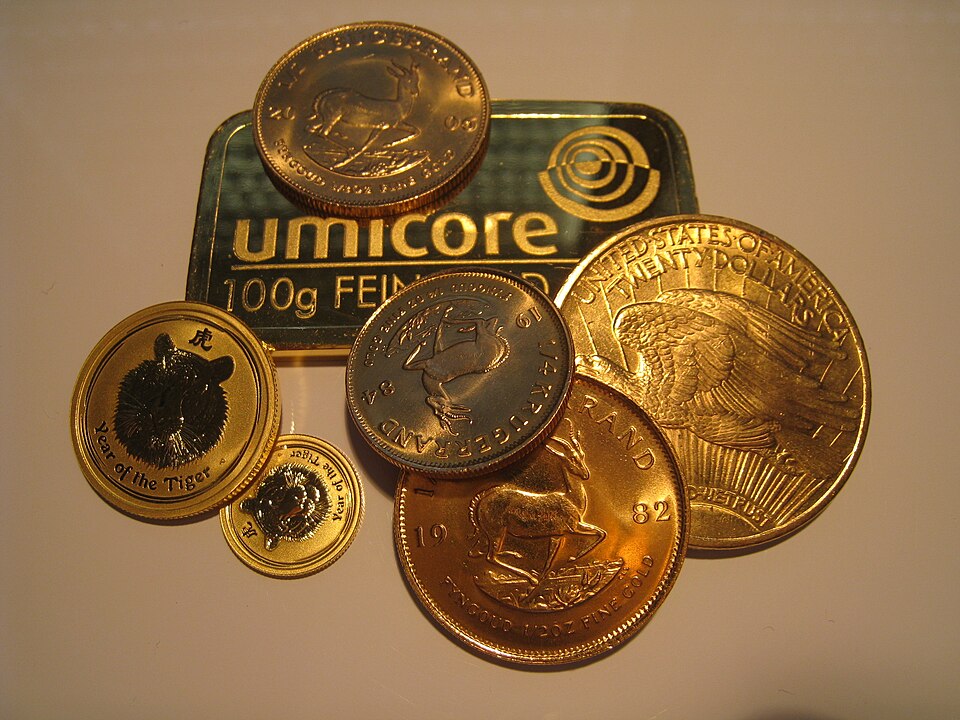
6. Physical Metal vs Paper Gold: A Critical Difference
Not all gold exposure is equal. Here is how physical ownership compares to the most popular paper alternatives:
| Factor | Physical Gold/Silver | Gold ETF (GLD/SLV) | Gold Mining Stock | Gold Futures |
|---|---|---|---|---|
| You own the metal | Yes | No (trust owns it) | No | No |
| Counterparty risk | None | Custodian/trust | Company risk | Exchange/broker |
| Storage required | Yes | No | No | No |
| Annual fees | Optional insurance | 0.25% – 0.50% | None | Roll costs |
| Tax treatment | 28% max (collectibles) | 28% max | 15% – 20% LTCG | 60/40 blended |
| IRA eligible | Yes (approved coins/bars) | Yes | Yes | No |
| Crisis resilience | Immune to system failure | Depends on markets | Can fall with stocks | Margin call risk |
| Liquidity | High (global market) | Very high (exchange) | High (exchange) | Very high |
For a comprehensive analysis of the trade-offs, see our guide on ETFs vs physical bullion and mining stocks vs physical gold.
7. Central Banks Are Buying at Record Levels
In 2022, 2023, 2024, and 2025, the world's central banks purchased more gold than in any period since the 1960s. China, India, Turkey, Poland, and dozens of other nations have been aggressively adding to their gold reserves. This is not speculation — it is the behavior of the most powerful financial institutions on Earth positioning for a shift away from dollar-centric reserves.
When central banks buy gold, they reduce available supply and signal a structural shift in confidence toward hard assets. Individual investors who buy physical gold are effectively making the same bet as these institutions — but at a size that is accessible to everyone. For the latest data, read our analysis on central bank gold buying.
8. Silver's Dual Role: Investment Metal and Industrial Powerhouse
Silver offers everything gold does as a monetary metal — inflation protection, crisis insurance, portfolio diversification — plus massive and growing industrial demand. Silver is a critical component in solar panels, electric vehicles, 5G infrastructure, medical devices, and water purification systems. The green energy transition alone is projected to consume over 200 million ounces of silver per year by 2030.
This means silver benefits from two independent demand drivers: investment buying during uncertainty and industrial consumption during economic growth. For the full picture, read silver industrial demand: solar, EVs, and the supply squeeze.
9. Legacy Wealth and Generational Transfer
Physical gold and silver have been passed down through families for centuries. A 1 oz gold coin given to a grandchild today will still be valuable in 50 years — regardless of which governments rise or fall, which currencies inflate away, or which stock exchanges merge or close. No other asset class offers this kind of generational permanence with zero maintenance.
Gold and silver are also among the simplest assets to transfer to heirs. There are no accounts to close, no passwords to recover, and no beneficiary forms to update. The metal itself is the asset.
10. Getting Started Is Easier Than You Think
You do not need thousands of dollars to begin. A 1/10 oz gold coin or a tube of silver rounds can start a meaningful precious metals position for under $500. Here is a simple starting framework:
- Check the spot price: Visit our live spot prices page to see current gold, silver, platinum, and palladium prices.
- Learn the basics: Read what are precious metals and spot price vs premium explained.
- Choose your first product: For gold, see the best gold coins guide. For silver, see silver coins vs bars.
- Buy from a trusted dealer: Review our precious metals buying checklist and how to avoid scams.
- Store securely: Learn about storage options from home safes to professional vaults.
For a complete walkthrough, our Your First Ounce guide covers everything a new buyer needs to know.
Frequently Asked Questions
Is physical gold a good investment in 2026?
Physical gold has outperformed most major asset classes over the past five years and continues to benefit from persistent inflation, record central bank buying, and geopolitical uncertainty. It serves primarily as wealth preservation and portfolio insurance rather than a speculative growth play.
How much gold and silver should I own?
Most financial advisors who include precious metals in their recommendations suggest allocating 5–15% of your total investment portfolio to physical gold and silver. The exact percentage depends on your age, risk tolerance, and financial goals.
Is silver a better buy than gold right now?
Silver is currently trading at a high gold-to-silver ratio, which historically suggests silver is undervalued relative to gold. Many investors allocate to both metals — gold for stability and silver for upside potential. See our gold vs silver comparison for a detailed analysis.
Where should I store physical gold and silver?
The three main options are a home safe, a bank safe deposit box, and a professional depository. Each has trade-offs in cost, access, and security. Our storage options guide breaks down the pros and cons of each approach.
Can I hold physical gold in an IRA?
Yes. A self-directed precious metals IRA allows you to hold approved gold and silver coins and bars in a tax-advantaged retirement account. Read our complete Gold IRA guide for setup instructions, eligible products, and fee breakdowns.
Start building your precious metals position today. Browse our gold collection and silver collection, check the live spot prices, and join VIP for member-only pricing on every order.